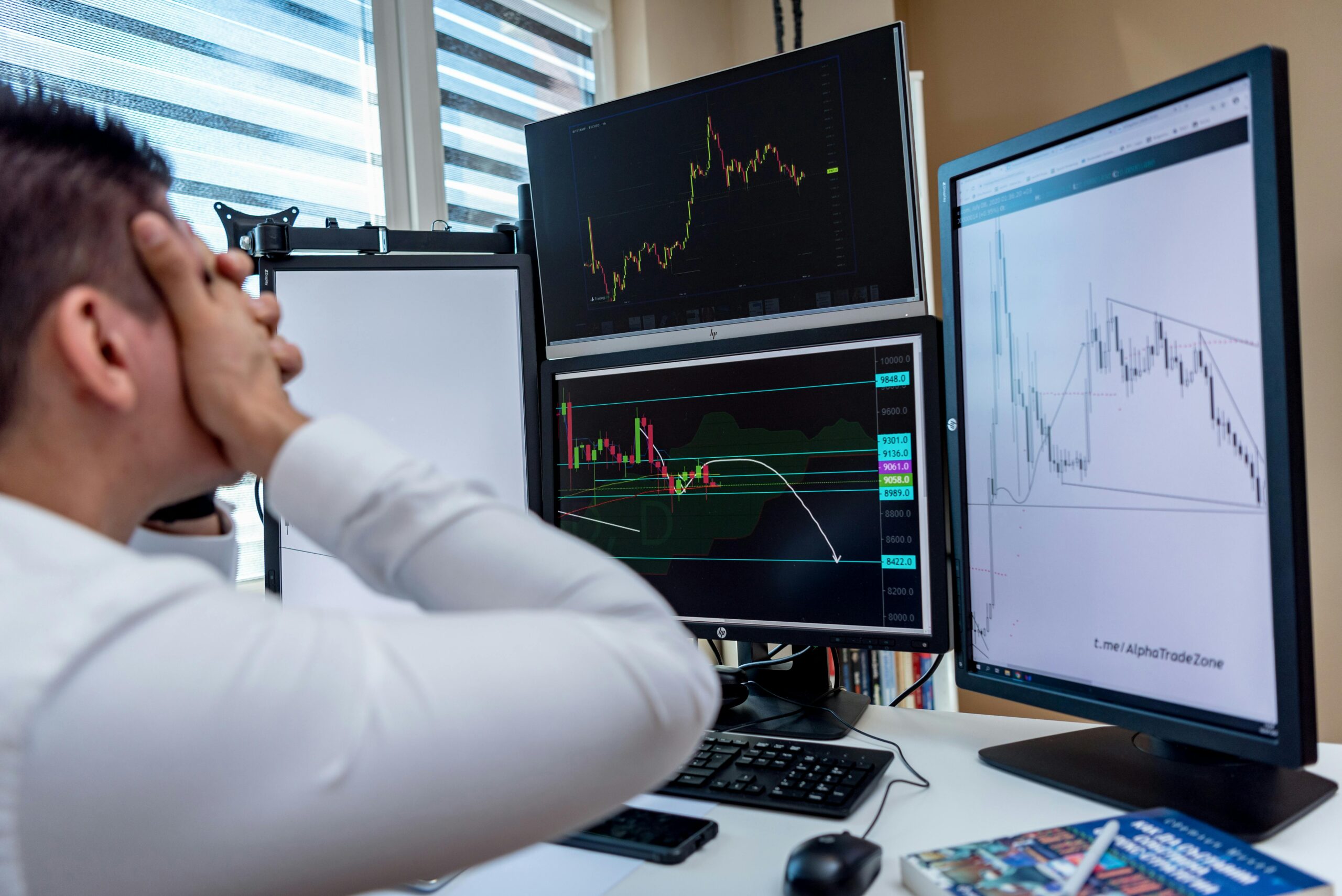
Volatility doesn’t just live in the market — it lives in a fund manager’s physiology in the form of emotion. Just as fund managers can learn to manage price swings and make better decisions, they can also learn to manage emotional swings through psychological skills training.
A quote often attributed to Archilochus captures the importance of this kind of training:
“We don’t rise to the level of our expectations, we fall to the level of our training.”
This reflects a timeless truth: under pressure, we default to our habits — not to how we hope to show up. For fund managers, those habits should include emotional regulation.
Emotion Is the Hidden Amplifier
Markets fluctuate. That’s their nature. But when volatility strikes, it’s not just the numbers that move — it’s our nervous system. Emotional reactivity distorts timing, clouds conviction, and narrows attention. Even seasoned fund managers can fall prey to hesitation, overtrading, or impulsive exits.
Legendary trader Jesse Livermore famously said:
“The most important thing in trading is to control your emotions.”
These insights remains timeless: emotional control isn’t a luxury — it’s a necessity.
The great news is that the emotional system can be trained. Attributes like emotional intelligence and emotional agility can be developed and honed. These are learnable skills that enhance composure, sharpen reactions, and help fund managers make the decisions they want to make — especially during turbulent times.
The Neuroscience of Emotional Hijack
When markets turn chaotic, the brain doesn’t just process numbers — it processes threat. Under pressure, multiple neurological events unfold simultaneously. One of the most disruptive is what psychologist Daniel Goleman refers to as amygdala hijacking in his bestselling book, Emotional Intelligence: Why It Can Matter More Than IQ.
The amygdala is the brain’s emotional alarm system. It can override rational thought in milliseconds, triggering fight-flight-freeze responses before the prefrontal cortex has a chance to intervene. In trading, this emotional hijack can manifest in many ways. To name a few:
- Panic selling during a drawdown
- Overtrading after a perceived miss
- Freezing when a high-conviction position moves against you
These aren’t just poor decisions. Most of the time, they’re choices fund managers wouldn’t consciously make — but in the heat of the moment, they’re overridden by emotion.
This concept is echoed in the work of Denise Shull, a performance coach to traders and author of Market Mind Games, who emphasizes that emotion is inseparable from cognition. As she puts it:
“We can’t actually apply math or logic, let alone do other analyses, make judgments, or decisions, if we lack feeling and emotion.”
Shull’s research shows that emotions aren’t noise — they’re data. Traders who learn to interpret their emotional signals — rather than let them run them — make better decisions under uncertainty. Emotional awareness isn’t a distraction from performance. It’s a prerequisite for it.
What Expert Performers Do Differently
Elite performers — whether in sport, special ops, or fund management — train emotional regulation as part of their core skillset.
What most people call “emotional decisions” are often made on autopilot — fast, unconscious reactions driven by emotional circuitry we don’t even realize is active. In these moments, we’re not managing emotion — we’re being managed by it. The difference between reactive and resilient performers lies in their ability to shift from unconscious emotional influence to conscious emotional leverage.
Through performance mastery coaching, fund managers, CIOs, and traders can learn to recognize emotional patterns as they emerge, regulate emotional intensity before it hijacks decision-making, and leverage emotional signals to make more informed, context-sensitive choices.
Three foundational frameworks drawn from elite performance psychology and organizational science support the development of emotional regulation:
- Mental skills training, which includes arousal regulation and thought management. These techniques help fund managers downshift nervous system activation, interrupt reactive loops, and restore executive function under pressure.
- Emotional intelligence, specifically the work of Dr. Reuven Bar-On, offers evidence-based approaches to measure and train EQ. The EQ-i 2.0 and EQ-i 2.0 360 are widely regarded as best-in-class assessments that help fund managers identify emotional strengths and blind spots. These tools provide a strategic starting point for building emotional awareness, impulse control, and stress tolerance in high-stakes environments.
- Emotional agility, based on the research of Dr. Susan David, helps fund managers navigate complexity without getting stuck in reactive patterns. By learning to step back from automatic emotional responses, fund managers can gain flexibility, clarity, and composure in the face of uncertainty.
These rigorously tested frameworks take the invisible concept of emotions — often described as automatic and unconscious — and provide structured ways to train and grow emotional resiliency.
Strategic Takeaways
- Volatility is not just a market condition — it’s a psycho-physiological event
- Fund managers who train emotional regulation protect their timing, clarity, and conviction
- The best fund managers don’t just manage capital — they manage their emotions
Explore the Edge
At Transcendent Consulting, Dr. Dan equips fund managers with the psychological tools to navigate volatility with clarity, composure, and conviction. Drawing from elite sport, neuroscience, and organizational science, his evidence-based protocols help investment professionals train emotional precision where it matters most — in the heat of decision-making.
If you’re ready to move beyond reactive habits and build mastery under pressure, let’s talk